Justin La Rose, RP · 25+ Years in Mental Health · 15,000+ Clinical Hours
OCD Therapist & ERP Therapy in TorontoTalk therapy wasn't built for OCD. ERP was.
OCD therapy in Toronto at The OCD Clinic means one thing: Exposure and Response Prevention (ERP), in person at Yonge and Bloor or online across Ontario. ERP is backed by decades of randomized controlled trials and recommended as a first-line treatment by NICE and the American Psychiatric Association. You've talked about your fears long enough. ERP is where you practise doing something different when the thought shows up.
ERP therapy for OCD with an OCD therapist in Toronto, a dedicated ERP practice by La Rose Counselling Services. In person or online across Ontario. Sessions $250 with a senior clinician or $225 with an associate clinician, free 20-minute consultation.


Free OCD Severity Screening
Free OCD
Screening
This self-check is based on the Yale-Brown Obsessive Compulsive Scale (Y-BOCS)[Goodman et al., 1989], the most widely used measure of OCD severity. It's a screening tool, not a diagnosis; only a qualified clinician can diagnose OCD. It takes about 5 minutes and doesn't ask for your email. Based on your answers, you'll get a severity estimate and general information about what treatment for OCD typically involves.
If you book, we'll do a full clinical assessment with you before your first session, so we see the whole picture.
Three Ways We Can Help
How Can We
Help You?
Not sure where to start? Read about OCD treatment in Toronto, how ERP therapy in Toronto runs week by week, or online OCD therapy anywhere in Ontario. Comparing us with public programs first? Start with every OCD treatment option in Ontario, compared honestly.
Understanding OCD
What OCD
Actually Is
At its heart, OCD is a phobia of your own thoughts, not a personality quirk. An intrusive thought sets off anxiety, the anxiety pushes you into a compulsion, and the compulsion makes the next round worse. Over time, the loop tightens.
Trigger
Something you see, hear, feel, or think sets off the cycle.
Intrusion
An unwanted thought, image, or urge enters your mind. You didn't choose it.
Interpretation
Your brain says: this thought means something. This could be real. This is dangerous.
Anxiety
Fear, dread, disgust, or a feeling that something is terribly wrong.
Compulsion
You do something to make the feeling go away: check, wash, count, ruminate, ask for reassurance.
Relief
It works, for a moment. Then the cycle starts again, a little stronger than before.
The relief is real, and that's the problem. It's called negative reinforcement: the compulsion gets the credit, so your brain asks for it again. It's like my keys. I was attacked by a dog as a kid, and for years I walked home from the subway holding my keys like a weapon. I was never attacked on the way home, so the keys got the credit.
Understanding the pattern is the first step. Breaking it takes reps.
The Treatment
How ERP
Therapy Works
ERP works by letting your brain test its predictions without the compulsion getting in the way. ERP stands for Exposure and Response Prevention, and it has the largest body of trial evidence for OCD. For the full walk-through, see how ERP therapy in Toronto works.
Exposure
You face the thoughts, images and situations that trigger your OCD, a step at a time. It's like the gym: we start with a weight you can lift, then add a little. You learn you can carry the discomfort without the compulsion.
Response Prevention
You don't do the compulsion: no checking, washing or mental reviewing. Your brain predicted disaster, or predicted you couldn't stand the feeling, and now it sees what actually happens. That's called expectancy violation.
New Learning
Rep by rep, you build new learning that competes with the old fear. That's inhibitory learning. The thoughts may still show up; the goal is that you don't have to obey them.
The Honest Truth
ERP is hard, and in my experience the first few weeks are the hardest. You're facing things on purpose that you've been avoiding, without the compulsions that used to bring relief. Many people I work with start to notice real change after that stretch. In clinical trials, most people who complete ERP improve meaningfully; the exact figure varies by study and by how improvement is defined.*
ERP's results hold after treatment ends.† Unlike medication, where symptoms commonly return after stopping, improvement from ERP persists, because you've learned something, not taken something.
*Response rates among treatment completers across randomized controlled trials (Foa et al., 2005; Law & Boisseau, 2019). Individual results vary. †Law & Boisseau, 2019.
Interactive Guide
The OCD Cycle
OCD keeps you stuck in a loop, and ERP is how you step out of it. Click through to see what happens inside the loop and what changes when you stop feeding it.
01 / 08
How OCD Works
OCD works like a trap, and the trap is built out of relief. Step through this to see what happens inside the cycle and how ERP gets you out.
About
25+ Years in Mental Health.
15,000+ Hours.
100s of OCD Clients.
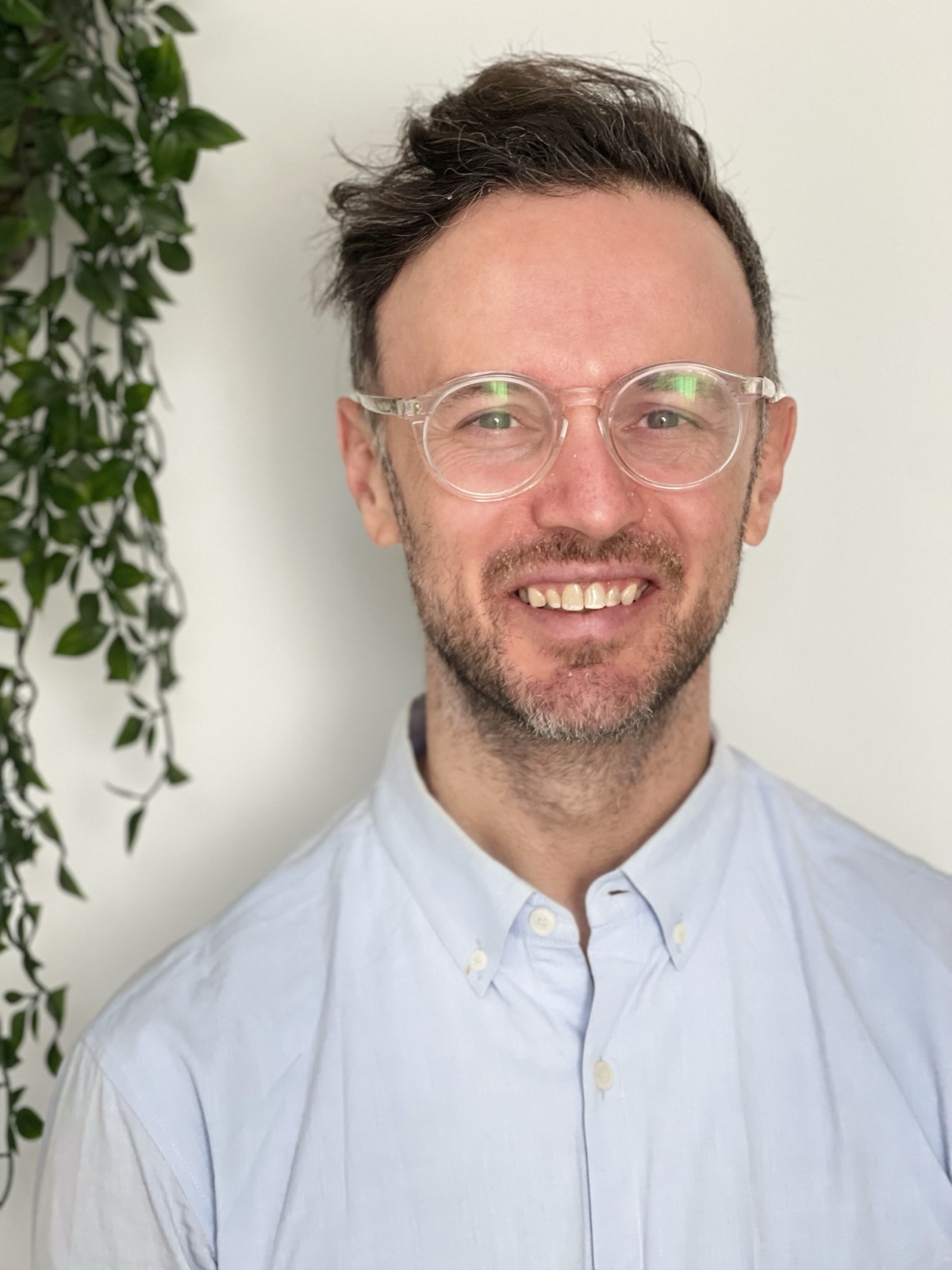
I'm Justin La Rose, a Registered Psychotherapist and Clinical Director at La Rose Counselling Services, which runs The OCD Clinic. I've worked in mental health for more than 25 years and sat across from hundreds of clients who were once where you are now. I built this practice for people stuck in the cycle.
My practice is OCD, and ERP is the tool, because it has the largest body of trial evidence for OCD. But no one who sits across from me is a walking set of symptoms. You're a whole, complicated person with a whole life, and two people with OCD rarely need the same plan. So my team and I start from ERP and fit it to you: what your OCD latches onto, what you value, how fast you can move. Whether you work with me or one of the therapists on my team, we'll be straight with you about what to expect, and we won't waste your time. The goal is that you fire us, for the right reasons.
Besides treating OCD, I train therapists to treat it. At The OCD Clinic we work as one clinical team: every therapist is trained in my approach to treating OCD, and I supervise all clinical cases. If you're a therapist who wants to get better at OCD and ERP, reach out.
25+
Years in Mental Health
100s
OCD Clients
15K+
Therapy Hours
FAQ
Questions You Actually Have
I can't answer that from a web page, and anyone who says they can is guessing. What I can tell you is the pattern: OCD tends to latch onto the things you care about most, like your morality, your relationships and your safety. Having a thought isn't the same as intending to act. A clinician assesses risk from the whole picture, not from one symptom, and looking at the whole picture is exactly what the free consultation is for.
In my practice, people with moderate OCD usually finish the active part of ERP in about 12 to 16 weekly sessions; it can be shorter or longer. You'll get an honest estimate after your assessment, not a promise. The first 4 to 6 weeks usually feel like the hardest, because you're facing things you've been avoiding without the compulsions that used to bring relief. You won't be doing it alone: your therapist plans each step with you and adjusts the pace as you go. After those first 4 to 6 weeks, many people I work with start to notice the OCD has less pull.
Talk therapy helps you understand your feelings. ERP changes what you do when they show up. You face the thoughts and situations that trigger your OCD without doing the compulsion, and you learn that what you feared doesn't happen, or that you can carry the uncertainty without the ritual. If insight alone fixed OCD, I wouldn't need a clinic just for OCD. Many people arrive here after years of therapy that never targeted the cycle. ERP is recommended as a first-line treatment for OCD by NICE and the American Psychiatric Association (NICE, 2005; Koran et al., 2007).
Individual OCD sessions are $250 (50 min) with a senior clinician or $225 with an associate clinician, and the first 20-minute consultation is free. Limited sliding scale options are available, ask about them. Many extended health benefits plans cover psychotherapy from a Registered Psychotherapist, with limits that vary by plan, so check with your provider to confirm your coverage.
In clinical trials, most people who complete ERP improve meaningfully. Not everyone, and the exact number moves depending on the study and how improvement was defined. When ERP falls short, I look at three things first: whether what was delivered was actually ERP (exposures in session, response prevention planned, mental compulsions targeted), whether the person was ready to commit to response prevention, and whether something else, like depression, needed attention first. If it still isn't moving, the therapist should get curious about the therapy, not blame the client. That can mean medication, more frequent sessions, or a higher level of care.
Yes, online across Ontario. A review of 22 trials found no significant difference between remote and face-to-face CBT for OCD (Salazar de Pablo et al., 2023), though people with more severe symptoms may do better in person. If you're in the Toronto area, we can add in-person sessions when they help. Some people do all of their ERP online. Others come in for certain exposures and keep check-ins and response prevention planning online. We'll work out the mix with you.
Not in the first session, and not until you're ready. Many people I see have never said the thought out loud to anyone, so we go at your pace. Our therapists have worked with the full range of OCD presentations, including the thoughts people find hardest to say. Whatever you're carrying, we've heard it before, and it won't change how we work with you.
Still have questions? We have more answers. Read more →
You Don't Have To Live Like This.
Book a free 20-minute consultation. No commitment, no pressure. Just a conversation about where you are and how we can help.
Where would you like to start?
I'm ready to book a free consultI want to email youI want to complete a free online OCD assessmentIn crisis? In Canada, call or text 9-8-8 (Suicide Crisis Helpline), call 911, or go to the nearest emergency department.